Is Toner a Powder or a Liquid? What This Means
Understanding the Two Main Types of Printer Toner
To answer simply: toner is a fine powder. That’s the short version. But the full picture is more interesting. Knowing the difference between standard powder toner and newer liquid toner technology helps you make smarter choices for your home or office.
Most laser printers you see today use a dry, powdered toner. It’s the classic formula that has been the standard for decades. However, a different kind of printer technology exists that uses liquid toner. It’s less common but has its own unique benefits.
The Classic: Powdered Toner Explained
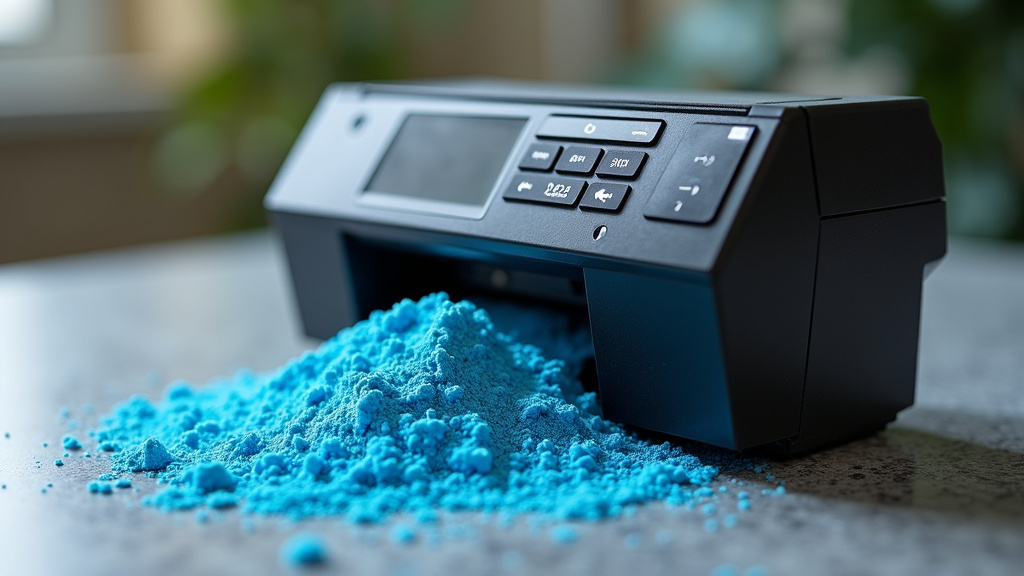
Think of powdered toner like very fine, colored dust. It’s not just random pigment; it’s a mix of plastic particles and colorants. Inside your laser printer, a laser draws the image onto a drum. The drum then picks up this charged powder and rolls it onto the paper.
Next, the paper goes through hot rollers. This heat melts the plastic powder, fusing it permanently onto the page. The result is a sharp, smudge-resistant print. We found that this electrostatic process is the foundation of most modern laser printing (International Journal of Advanced Research in Electrical, Electronics and Instrumentation Engineering).
How Powdered Toner Works in Your Printer
The journey from powder to printed page is a neat trick of physics. The process happens in a fraction of a second.
- Charging: A photosensitive drum gets an electrical charge.
- Exposing: A laser beam “writes” the document onto the drum, discharging specific areas.
- Developing: Negatively charged powder toner sticks only to the discharged (image) areas of the drum.
- Transferring: The paper gets a stronger charge, pulling the toner image from the drum.
- Fusing: Heated pressure rollers melt and bond the powder to the paper fibers.
The Alternative: Liquid Toner Technology
Now, what about the other type? Liquid toner is exactly what it sounds like—color pigment suspended in a liquid carrier. This technology is primarily used in a specific kind of printer called an electrophotographic printer.
In these printers, the liquid toner is attracted to the charged areas of the drum, just like the powder. The paper then passes through the drum and into a fuser unit. The fuser evaporates the liquid carrier, leaving the pure pigment fused to the page. Many experts note this process can produce exceptionally smooth and vibrant colors (Xerox Technology Insights).
Key Differences in the Fusing Process
The fusing stage is where the two types really diverge. Powder requires melting, while liquid requires evaporation. This fundamental difference impacts everything from print speed to energy use.
Because liquid toner doesn’t need to be melted from a solid, it can sometimes fusing at lower temperatures. However, the fuser must be hot enough to vaporize the liquid carrier efficiently. The technology is precise but often found in higher-end production machines rather than typical home offices.
What This Difference Means For You and Your Printer
Okay, so there’s powder and there’s liquid. Why does it matter to you as a shopper or user? The type of toner dictates the printer’s design, cost, and output quality. Your choice depends on what you value most: convenience, cost-per-page, or print perfection.
Comparing Print Quality and Use Cases
Both technologies produce excellent, professional results. However, they have subtle differences. Powder toner is the king of crisp text and sharp lines for everyday documents. Liquid toner often excels in producing richer, more uniform color gradients.
For a small business printing reports and invoices, a standard powder toner laser printer is reliable and cost-effective. A graphic design studio or a print shop needing flawless photo reproduction might lean toward high-end liquid toner systems.
| Feature | Powdered Toner (Dry) | Liquid Toner (Wet) |
|---|---|---|
| Technology | Standard in most laser printers | Used in specific electrophotographic printers |
| State | Dry, fine plastic particles | Pigment suspended in a liquid carrier |
| Fusing Method | Heat melts the powder onto paper | Heat evaporates the liquid, leaving pigment |
| Common Application | Home, office, general business printing | High-volume production, specialty commercial printing |
| Typical Availability | Widely available and affordable | Less common, often in specialized machines |
Considering Cost and Accessibility
When it comes to cost, powder toner cartridges are the clear winner for the average consumer. They are mass-produced, have a huge aftermarket, and are easy to find in stores or online. Liquid toner systems are often proprietary and come with higher upfront machine costs.
We found that the cost-per-page for liquid toner can be lower in very high-volume environments. But for the rest of us, the low cost and widespread availability of powder toner cartridges make it the practical choice. It’s all about scale.
Identifying What’s Inside Your Toner Cartridge
Curious about what you’re actually buying? It’s easy to find out. The vast majority of cartridges sold for home and office laser printers contain powdered toner. This is the technology you will encounter 99% of the time.
Reading the Label and Specifications
Your printer’s manual is the ultimate source of truth. It will specify the exact type of toner and cartridge model you need. When shopping, the product description will often mention “powder” or “dry toner.”
Cartridge packaging and reputable online listings will list compatibility with your specific laser printer model. If you see terms like “electrophotographic” or the brand name associated with liquid toner (like Xerox iGen), you’ve found a different beast.
Visual Clues and the Shake Test
Here’s a fun, informal test you can do. Ever wonder why some old-school advice suggests gently shaking a “low toner” cartridge? It’s because the remaining **powdered toner** can settle. A light shake redistributes the powder, often letting you print a few more pages. You can’t really “shake” a liquid system the same way.
Also, if you ever handle an empty cartridge, you might see a black or colored dust inside. That’s residual powder. Liquid toner cartridges would be coated in a dried, thin film of pigment instead.
Your Quick Checklist for Toner Shopping
Next time you need to replace your toner, keep these simple points in mind. They’ll help you buy with confidence.
- Know Your Printer Model: Always match the cartridge to your exact printer make and model number.
- Assume Powder: If you have a standard home or office laser printer, you need powdered toner.
- Check the Description: Look for words like “laser toner cartridge” or “dry toner” in the product details.
- Consider Your Volume: For regular printing, stick with widely available powder toner. Research liquid options only if you run a commercial print operation.
- Trust the Manual: When in doubt, refer to your printer’s user guide for the definitive answer.
- Recycle Responsibly: Both powder and liquid toner cartridges can often be recycled. Check with the manufacturer or local office supply store for take-back programs (EPA).
So, the next time you’re shopping for printer supplies, you’ll know exactly what you’re looking at. That fine powder inside your cartridge is the result of decades of engineering, designed to give you sharp, clean prints day after day.