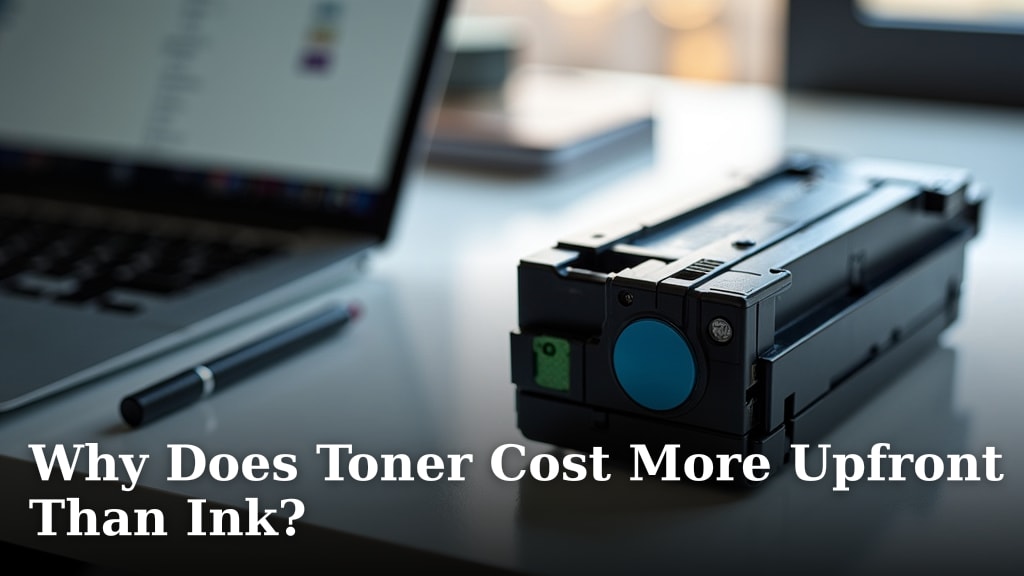
Why Does Toner Cost More Upfront Than Ink?
Toner cartridges often cost more upfront than ink cartridges because they contain more toner and are designed for higher print volumes. Unlike liquid ink, toner is a dry powder made of fine plastic particles. This powder is more expensive to manufacture. It also requires more complex and robust printer components to heat and fuse it onto the paper. This upfront cost reflects the greater amount of material and the advanced technology needed for laser printing.
We found that laser printers, which use toner, are typically purchased with the expectation of printing many pages over their lifespan. The initial price of the toner reflects this long-term printing efficiency. Inkjet printers, on the other hand, often have a lower upfront printer cost and use less expensive ink cartridges suitable for occasional, lower-volume printing. Think of it like buying a tool: a heavy-duty, professional-grade tool will cost more initially but last much longer and handle tougher jobs than a lighter, less expensive one.
- Toner is a powder, ink is liquid.
- Toner printers are built for high volume.
- Toner cartridges hold more material.
- Laser printer components are more complex.
- Inkjet printers are for lower print needs.
Let’s break down why that initial toner price tag might seem a bit steep compared to your average ink cartridge.
“`htmlUnderstanding Toner’s Higher Initial Price Tag
You’ve probably noticed it. When you’re shopping for printer supplies, that toner cartridge seems to stare at you with a much higher price than its ink cartridge cousin. It’s a common observation that can leave you scratching your head. Why does toner cost more upfront than ink?
We’ve looked into this common consumer question. The main reasons boil down to what toner is made of and how it’s used. Toner isn’t just a different color of liquid; it’s a completely different material designed for a different kind of printing. This difference in material and intended use directly impacts its production cost and, therefore, its price tag.
Toner vs. Ink: A Tale of Two Powders (and Liquids!)
What Exactly is Toner?
Think of toner as a very fine powder. It’s not wet like ink. Instead, it’s made of tiny particles. These particles are typically a mix of plastic, carbon, and coloring agents. The exact composition can vary between manufacturers. We found that these ingredients need to be ground very finely. This precise milling process is more involved than creating liquid ink.
The Manufacturing Process: More Steps, More Cost
Creating this fine powder involves several stages. Raw materials are mixed and then often melted together. They are then cooled and ground into microscopic particles. Sometimes, a process called “chemical precipitation” is used. This method produces very uniform particles. It’s a more sophisticated and energy-intensive process than simply mixing pigments with a liquid base for ink. Many sources indicate this detailed manufacturing is a primary driver of toner’s higher cost.
What About Ink?
Ink, on the other hand, is usually a liquid. It’s made of dyes or pigments suspended in a liquid carrier. This carrier is often water-based, with added solvents and agents to ensure smooth flow and quick drying. While quality inks involve careful formulation, the fundamental production process is generally less complex than that of toner powder. We found that the ingredients for ink are often less expensive to source and process.
How Toner and Ink Work: Different Technologies, Different Needs
The Laser Printer’s Heat and Fuse Method
Laser printers use toner in a unique way. First, an electrical charge is applied to a drum. This charge attracts the toner powder to specific areas, forming an image. Then, the paper rolls over the drum, picking up the toner. The toner is then permanently fused onto the paper using a fuser unit, which is essentially a hot roller. This heating and fusing process requires specialized printer components.
Inkjet Printers: Spraying Tiny Droplets
Inkjet printers work differently. They have tiny nozzles that spray microscopic droplets of liquid ink directly onto the paper. These droplets dry naturally or with the help of very slight heat. The print heads and nozzles are sophisticated, but they don’t require the high-temperature fusing mechanism that laser printers do. This simpler process contributes to the lower cost of ink cartridges.
Printer Components: Built for the Job
Because toner needs to be heated and fused, laser printers have more robust internal components. The fuser unit, in particular, is a key part that generates heat. These parts are designed for durability and frequent use. This heavier-duty construction within the printer itself adds to the overall cost of laser technology, which is then reflected in the consumables.
Volume and Longevity: The True Cost of Printing
Toner is Built for High-Volume Printing
Many experts point out that laser printers are designed for high-volume print jobs. Think of office environments or busy home users who print dozens or hundreds of pages weekly. Toner cartridges are engineered to handle this demand. A single toner cartridge can often print thousands of pages. This is significantly more than a typical inkjet cartridge.
Ink is Better Suited for Lower Print Needs
Inkjet printers, conversely, are often purchased for lower print volumes. They excel at printing photos with vibrant colors or short documents. An ink cartridge might print a few hundred pages, sometimes less, depending on coverage. This makes them suitable for users who print infrequently or only need a handful of pages at a time.
Yield Matters: Pages Per Cartridge
The number of pages a cartridge can print, known as its yield, is a critical factor. We found that toner cartridges consistently boast much higher page yields. This means that while the upfront cost of a toner cartridge is higher, the cost per page can often be lower. This is especially true for users who print a lot. It’s like buying in bulk; the unit price might be higher initially, but you save money over time.
An Analogy for Understanding: Battery Life
Consider it like buying batteries. You can buy a small pack of standard AA batteries for a few dollars, and they’ll power a simple toy for a while. Or, you can buy a pack of high-capacity, rechargeable batteries for a higher upfront cost. Those rechargeable batteries will last much longer and can be used over and over, making them more economical for frequent use. Toner is like the rechargeable battery for your printer—a bigger initial investment for long-term performance.
| Feature | Toner Cartridge | Ink Cartridge |
|---|---|---|
| Material | Dry powder (plastic, pigment) | Liquid (dyes/pigments in carrier) |
| Printer Technology | Laser (heat and fuse) | Inkjet (spray droplets) |
| Typical Page Yield | High (thousands of pages) | Lower (hundreds of pages) |
| Upfront Cost | Higher | Lower |
| Best For | High-volume, text documents | Low-volume, photos, occasional use |
Is the Higher Toner Price Always Justified?
The Economics of High-Volume Printing
When you’re printing regularly, the economics start to make sense. While you pay more for a toner cartridge initially, you’re buying the capacity to print many more pages. If you print 500 pages a month, a toner cartridge that yields 3,000 pages will last you six months. An ink cartridge yielding 300 pages would require almost two cartridges per month, or 12 cartridges over six months. You can see how the cost can add up.
When Ink Might Still Be the Better Choice
However, if your printing needs are very light—say, a few pages a week or less—then the lower upfront cost of ink cartridges might be more appealing. You won’t be stuck with a large, expensive toner cartridge that might sit unused for a long time. Many sources suggest that ink can dry out if not used regularly, which is another consideration for low-volume users.
A Quick Checklist for Your Printing Needs:
- How many pages do you print per week/month?
- Do you primarily print text documents or photos?
- What is your budget for printer supplies?
- How often do you typically replace cartridges?
- Are you looking for the lowest cost per page or the lowest upfront cost?
Answering these questions helps you understand which type of cartridge makes the most sense for your specific situation. The higher upfront cost of toner is a reflection of its advanced material, complex manufacturing, and design for high-volume printing. It’s an investment in efficiency for those who print a lot.
Conclusion
You’ve seen that toner cartridges cost more upfront because they use a special powder and are built for high-volume printing. Unlike liquid ink, toner is manufactured through a more complex process. Laser printers also have sturdier components to handle the heat and fusing involved. While the initial price is higher, toner often leads to a lower cost per page for frequent printers. Before your next purchase, consider your printing habits. If you print a lot, toner is likely your most economical choice. If you print rarely, sticking with ink might be best for your budget.
Frequently Asked Questions
How does toner’s dry powder differ from liquid ink in terms of cost?
Toner is a fine powder made of plastic, carbon, and coloring agents. Its manufacturing involves precise grinding and sometimes chemical processes, which are more costly. Ink is a liquid, often water-based, and its production is generally less complex and uses less expensive raw materials. This difference in material and production complexity directly impacts upfront costs.
Can a toner cartridge really last longer than multiple ink cartridges?
Yes, research shows toner cartridges typically have a much higher page yield. This means one toner cartridge can print thousands of pages, whereas an ink cartridge might print only a few hundred. For users who print frequently, this high yield makes toner more cost-effective over time, even with its higher initial price.
Are laser printer components more expensive because they use toner?
Laser printers have more robust internal parts, like the fuser unit, to handle the heat required to fuse toner onto paper. This heavier-duty construction is designed for frequent, high-volume use and contributes to the overall cost of laser printer technology. This cost is then reflected in the price of toner cartridges.
When would ink still be a better choice than toner?
If you only print a few pages occasionally, ink cartridges are often a better fit. Their lower upfront cost means you don’t spend more on a large toner cartridge that might sit unused for extended periods. Ink can dry out if not used regularly, making it a more suitable option for light printing needs.
What does “page yield” mean for toner and ink cartridges?
Page yield refers to the estimated number of pages a cartridge can print. Toner cartridges are known for high page yields, often in the thousands. Ink cartridges generally have lower page yields, usually in the hundreds. This difference is a key factor in determining the true cost per page for your printing volume.