Why Are HP Ink Cartridges So Expensive?
HP ink cartridges can cost more because you pay for brand-specific supplies, print quality, research, and the printer's expected yield. The best way to lower your cost is to compare cost per page, choose the right yield, and confirm compatibility before buying.
On this page (9 sections)
- Why Are HP Ink Cartridges So Expensive?
- What makes HP ink cartridges cost more?
- Does the printer's price affect cartridge costs?
- Why does page yield change the value?
- Can compatible cartridges lower printing costs?
- Should you switch from ink to toner?
- Which toner options suit frequent black-and-white printing?
- How can you reduce HP ink costs?
- What is the best way to compare cartridge choices?
Why Are HP Ink Cartridges So Expensive?
HP ink cartridges can be expensive because they are model-specific supplies with engineering, ink formulation, quality control, and distribution costs built into each replacement. Your real cost also depends on page yield, how often you print, and whether you use standard or high-yield cartridges.
The price on the box is not the whole cost. It reflects the work needed to make each replacement fit a particular printer and produce the same result page after page.
Page yield changes what a cartridge costs per printed page. A cartridge that prints more pages can spread its price over more work, even if it costs more to buy.
Print volume matters for the same reason. Someone who prints a few pages a month will use a cartridge very differently from someone who prints every day.
Standard and high-yield cartridges give you a choice about capacity. A standard cartridge may suit lighter use, while a high-yield cartridge may suit heavier use if the printer accepts it.
A cheap printer can make replacement ink feel especially costly. The printer may be affordable because the long-term supply relationship matters more than the initial hardware price, and the replacements become the ongoing cost.
That is why comparing printers by purchase price alone can mislead. You need to look at how much printing you do and what each supply is expected to yield.
Ink formulation also adds to the cost. The ink must work with the print system and produce clear text and consistent color over the life of the cartridge.
Quality control helps keep that output consistent. Each cartridge has to meet the same standard for fit, flow, and print result.
Distribution adds further cost before the cartridge reaches a shelf. Manufacturing, packaging, storage, shipping, and retail handling all sit between the factory and your printer.
So the high price is best read as a total system cost. Model fit, yield, print volume, and the supply itself all shape what printing costs you over time.
What makes HP ink cartridges cost more?
Brand-specific design is one major reason HP ink cartridges cost more. Each cartridge must fit a certain printer family, communicate with the printer, and deliver ink through the correct print system.
That design work is specific, not general. A cartridge made for one printer family will not simply transfer to another, even if it looks similar on the outside.
Ink also needs to produce readable text, clean graphics, and consistent color. HP's ink and toner supplies guidance separates supplies by printer and cartridge family, which shows why model matching matters.
Matching matters in daily use because the printer and cartridge work as a pair. The printer controls how ink is placed, while the cartridge supplies the ink in the form that system expects.
That pairing affects set-up and care. You need the correct cartridge family for your exact printer model, since the wrong cartridge can lead to poor fit or poor output.
Distribution adds another layer. The cartridge moves through manufacturing, packaging, storage, shipping, and retail channels, and storage and shipping must protect it so it arrives ready to work.
Research and development matter too. Cartridge design is not only about putting liquid ink in a container.
Engineers have to test how the cartridge behaves across the expected page yield. They also check print quality at the start, in the middle, and near the end, and the cartridge must work with the printer's printhead, software, and maintenance routines.
That is why cartridge cost cannot be separated from printer design. The supply and the machine were made to work together, and that joint design is part of what you pay for.
For buyers, the practical lesson is to check fit first, then use page yield and cost per page to judge value.
Does the printer's price affect cartridge costs?
A low printer price does not tell you what the printer will cost over time. Replacement cartridges, paper, maintenance, and the number of pages you print usually matter more after the initial purchase.
Before buying a printer, estimate your monthly pages. Separate black text pages from color pages, since color printing can use multiple cartridges at once.
Then compare the cartridge's stated yield with its purchase cost. The simple calculation is:
Cost per page = cartridge cost ÷ page yield
This figure is not the whole story, but it gives you a better comparison than the cartridge price alone. Our guide to how much printer ink costs explains the same cost-per-page approach in more detail.
Why does page yield change the value?
Page yield tells you how many pages a cartridge is expected to print under a stated standard. A cartridge with a higher yield usually lasts longer, but it may not be the best choice if you print only a few pages each month.
Standard cartridges can suit occasional printing because you buy less capacity at once. High-yield cartridges make more sense when you print often enough to use the extra toner or ink before storage becomes a concern.
Yield is also affected by the type of document. Pages with heavy graphics or large areas of color use more supply than ordinary text pages.
Compare the yield, not only the cartridge name. The phrase “high yield” matters because it describes capacity, but it does not guarantee the same cost per page across different printer families.
Can compatible cartridges lower printing costs?
Compatible cartridges may lower the purchase cost, but the trade-off can include fit, print quality, yield, and support. Check the exact printer model before choosing one, because a cartridge that looks similar may not work in your machine.
Genuine cartridges are designed for the printer family they name. That can make them easier to match, especially when you need predictable black text or regular office printing.
Compatible options may suit careful shoppers who confirm the seller's return terms and compare the stated yield. Avoid choosing by cartridge shape or color alone.
For more background, read why printer ink is so expensive and why Epson ink is so expensive. Different brands use different cartridge families, but the same buying questions apply.
Should you switch from ink to toner?
Toner can be a better fit for frequent black-and-white documents because laser printers use dry toner and often offer high-yield black cartridges. Ink can still be the better choice for color images, occasional home printing, or a printer you already own.
Laser printers do not use liquid ink. They use toner powder, a drum or imaging system, and heat to place the image on paper.
See why laser printers do not use ink cartridges for the basic difference.
Toner usually has a higher upfront supply cost, so compare the yield before deciding. Our guide to why toner costs more upfront than ink explains why the initial price can be higher even when the cost per page works out differently.
If your work is mostly black text, also compare whether toner is better than ink for text documents. Your print volume often matters more than the cartridge's shelf price.
Which toner options suit frequent black-and-white printing?
These products are toner cartridges, not HP ink cartridges, so they apply to Brother laser printers and all-in-ones that match their listed models. Confirm your printer model before ordering.
The Brother Genuine TN420 Mono Laser Toner Cartridge is a black genuine cartridge with an approximate 1,200-page yield. It suits owners of compatible Brother models who want a standard-yield option for mono laser printing.
The Brother Genuine High Yield TN660 Toner Cartridge is a black genuine high-yield cartridge with an approximate 2,600-page yield. It suits compatible Brother printer and all-in-one owners who print often enough to use the higher capacity.
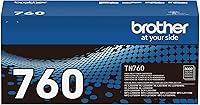
The Brother Genuine TN760 High Yield Black Toner is a genuine black high-yield cartridge with an approximate 3,000-page yield. It suits compatible Brother laser printer owners who want the highest stated yield among these 3 options.
How can you reduce HP ink costs?
Print fewer pages, choose the right yield, and compare cost per page before buying replacement cartridges. These steps usually have more impact than choosing by the lowest cartridge price.
Use draft or black-and-white settings when they meet your needs. Avoid printing large color backgrounds unless the document requires them.
Print a test page only when necessary, since repeated cleaning cycles can use ink. Keep the printer in the conditions recommended by its instructions, and replace cartridges only when print quality or the printer's supply indicator calls for it.
If you print rarely, consider whether the cartridge capacity matches your routine. If you print every day, compare high-yield options and the expected pages per cartridge.
What is the best way to compare cartridge choices?
Compare compatibility, page yield, and cost per page in that order. A cartridge that does not fit your printer is not a bargain, and a low upfront cost can be misleading if the yield is small.
For HP ink, start with your exact printer model and the cartridge family it accepts. Then compare standard and high-yield versions using the same page-yield method.
If your printing is mainly black text, compare the long-term cost of a laser printer and its toner supplies. If you need color photos or already own an HP inkjet, staying with the correct genuine or compatible cartridge may be simpler.
The answer to “why are HP ink cartridges so expensive” is not just brand pricing. The total cost comes from the supply design, the printer relationship, the yield, and how many pages you print.
Choose the cartridge that matches your printer and your monthly volume, then use cost per page to check whether the choice makes sense.
Frequently asked questions
Why are HP ink cartridges so expensive?
HP ink cartridges can cost more because they are brand-specific supplies designed for particular printers, with costs tied to ink formulation, cartridge engineering, quality control, distribution, and expected page yield. A low printer purchase price can also make replacement supplies a larger part of the total printing cost.
Is it cheaper to buy high-yield ink cartridges?
A high-yield cartridge can cost less per printed page when you use most of its capacity. Compare the stated page yield with your real print volume, then check that the cartridge fits your exact printer.
A standard cartridge may make more sense if you print rarely.
Are compatible ink cartridges worth using?
Compatible cartridges may reduce the upfront cost, but fit, print quality, yield, and printer support can vary. Check the exact printer model, return policy, and cartridge yield before switching.
Genuine supplies can be the simpler choice when consistent results and manufacturer compatibility matter most.
Is toner cheaper than ink?
Toner can be cheaper for frequent black-and-white printing because laser cartridges often have higher page yields and toner does not dry out like liquid ink. The right choice depends on your printer, print volume, color needs, and the cost per page for supplies that fit your model.