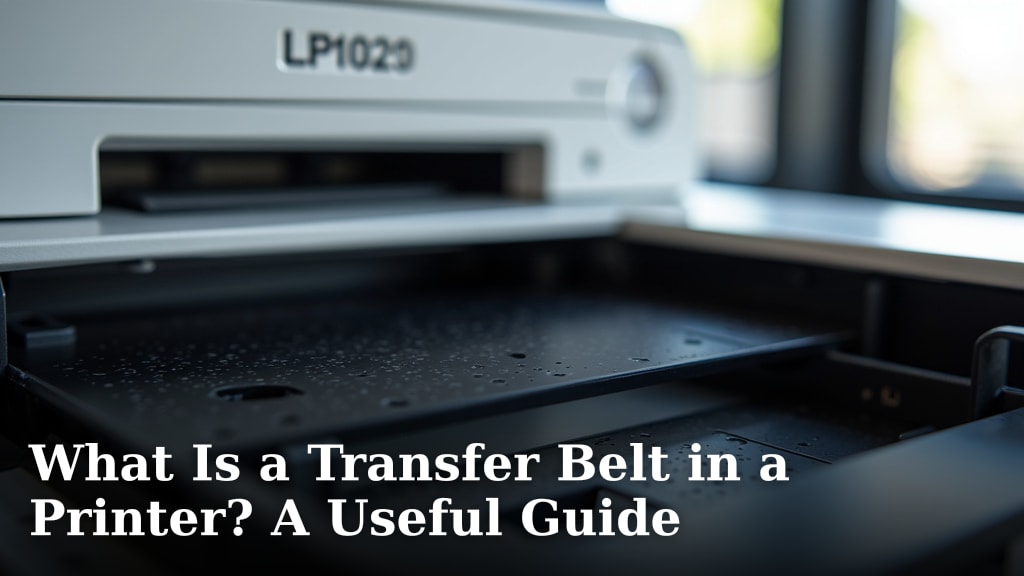
What Is a Transfer Belt in a Printer? A Useful Guide
A transfer belt in a printer is a critical component that moves toner from the drum to your paper. It’s a special belt, often made of rubber or a similar flexible material. Think of it as a tiny conveyor belt for toner powder. Without it, your printer wouldn’t be able to put images on the page.
This part is especially common in color laser printers. It’s responsible for laying down all the different colors precisely. If your printer starts making smudged prints or light images, a worn-out transfer belt could be the reason. Many users find it’s a part that needs eventual replacement.
- A transfer belt moves toner from the drum to paper.
- It’s most common in color laser printers.
- It ensures colors are placed correctly for prints.
- Troubleshooting smudges or light prints might involve this part.
- Replacement is sometimes needed over time.
Ready to learn more about what this essential part does and how to spot potential issues? Let’s walk through everything you need to know about transfer belts in your printer.
Understanding Your Printer’s Transfer Belt Function
So, what exactly does this transfer belt do in your printer? Think of it as the artist’s brush for your documents. It’s a key part of how your laser printer creates images, especially in color models. It carefully places toner onto the paper. Without it, that beautiful photo or sharp text would just stay inside the machine.
How the Transfer Belt Works in Laser Printing
Laser printing is a pretty neat process. It uses light to create an image on a drum. This drum then attracts toner powder. The transfer belt’s job is to take that toner from the drum. Then, it moves it to the exact spot on your paper where it needs to go. It’s like a precise hand-off in a relay race.
In color printers, this happens multiple times. Each color toner (black, cyan, magenta, yellow) is applied in layers. The transfer belt ensures these layers line up perfectly. This layering is what gives you full-color prints. If you’ve ever seen fuzzy edges or colors that don’t quite match, the transfer belt might be involved.
The Drum-to-Belt Transfer
First, the photoreceptor drum gets an electrical charge. A laser then draws the image onto the drum. This creates charged areas that attract the toner particles. The toner sticks to the drum, forming your image. The transfer belt then touches the drum. It pulls the toner off the drum and onto itself. This happens with great precision.
The Belt-to-Paper Transfer
Next, the paper moves into position. The transfer belt, now holding the toner image, presses against the paper. Another electrical charge is applied. This charge is stronger than the one on the drum. It pulls the toner from the belt onto the paper. The paper then moves on to the fuser, where the toner is permanently melted into the paper fibers. This whole sequence needs to be timed perfectly.
Why Transfer Belts Are More Common in Color Printers
You’ll notice that transfer belts are a much bigger deal in color laser printers. Black-and-white laser printers usually transfer toner directly from the drum to the paper. Color printers, however, need to lay down multiple colors. This requires a more complex system. The transfer belt acts as an intermediary, making this multi-color process possible and accurate.
Imagine trying to paint a detailed picture by holding your brush right next to the canvas the whole time. It’s tricky! The transfer belt allows the printer to create each color layer separately and then combine them. This way, you get vibrant, accurate colors. Many users find this ability essential for professional-looking documents and photos.
Signs Your Transfer Belt Might Need Attention
When a transfer belt starts to wear out, it doesn’t usually fail suddenly. Instead, you’ll often see gradual changes in your print quality. It’s like a favorite t-shirt getting a little faded over time. You might not notice it on the first day, but eventually, it’s clear something is different.
One common symptom is streaky or faded images. If parts of your text or graphics are lighter than they should be, the belt might not be picking up toner evenly from the drum. You could also see smudges or ghosting. This means toner isn’t releasing cleanly from the belt onto the paper. Or, toner might be sticking to areas where it shouldn’t be.
Specific Print Quality Issues to Watch For
Let’s break down some of the visual cues. If you see vertical lines or bands running down your page, it could be a sign of a damaged spot on the belt. Maybe there’s a small tear or a piece of debris stuck to it. These imperfections transfer directly to your prints.
Another issue could be incorrect colors or color banding. If your reds look more like oranges, or if you see distinct stripes of color instead of a smooth blend, the belt might not be applying each color layer precisely. This affects the overall look of your print.
Sometimes, you might see a faint copy of the image appearing elsewhere on the page. This is often called “ghosting.” It means some toner isn’t releasing fully onto the paper, and a trace is left behind for the next page. This is a strong indicator that the belt needs a closer look. Many printer manuals will mention these as potential issues related to the transfer unit.
Transfer Belt Lifespan and Replacement Considerations
Transfer belts are considered a consumable part. This means they are designed to wear out over time. Their lifespan depends on several factors. The quality of the belt itself plays a role. The volume of printing you do is also a major factor. High-usage environments will see belts wear out faster than home offices.
We found that many manufacturers estimate a transfer belt’s life in terms of page counts. This can range from 50,000 pages to well over 100,000 pages. It really varies by printer model and usage. Think of it like car tires; how long they last depends on how much you drive and the roads you use.
When Is It Time to Replace?
If you’ve noticed persistent print quality problems that other troubleshooting steps haven’t fixed, it’s likely time to consider replacing the transfer belt. This is especially true if your printer is a few years old and has printed a substantial number of pages. Many users find that replacing the transfer belt can breathe new life into an older printer.
It’s a good idea to check your printer’s manual or the manufacturer’s website for specific information about your model. They often provide recommended replacement intervals. If you’re seeing the print quality issues we discussed, and your printer is reporting a “transfer belt replacement needed” message, that’s a clear sign.
Troubleshooting Steps for Transfer Belt Issues
Before you assume the transfer belt is the culprit, there are a few quick checks you can do. Sometimes, a simple cleaning can resolve minor issues. Make sure there isn’t any paper debris or foreign objects stuck in the paper path that might be interfering with the belt.
Here’s a quick checklist to run through:
- Restart your printer. Sometimes a simple reboot can clear temporary errors.
- Run a cleaning cycle. Check your printer’s menu for a cleaning utility.
- Inspect print samples. Look for consistent patterns of defects.
- Check toner levels. Low toner can sometimes mimic transfer belt issues.
- Consult your manual. See if your printer has specific diagnostic tools.
- Consider your page count. Is it nearing the estimated lifespan?
If these basic steps don’t help, and the print quality issues persist, then investigating the transfer belt itself is the next logical step. Many technicians agree that this is a common point of failure in laser printers over time.
Conclusion
You’ve learned that your printer’s transfer belt is essential for creating clear, vibrant prints, especially in color laser models. It acts like a precision courier, moving toner from the drum to your paper. When you start seeing faded images, streaks, or smudges, this little belt is often the reason. While it’s a consumable part designed to wear out, understanding its function helps you troubleshoot print issues effectively. If you’ve tried basic fixes and print quality remains poor, it’s time to consider a transfer belt replacement to restore your printer’s performance.
Frequently Asked Questions
Can a dirty transfer belt cause print problems?
Yes, a dirty transfer belt can definitely impact your print quality. Dust, paper fibers, or toner buildup can prevent it from picking up or releasing toner correctly. Running your printer’s built-in cleaning cycle is often the first step in resolving such issues. If that doesn’t work, it might indicate a more serious wear problem.
How do I know if it’s the transfer belt or the toner cartridge?
Transfer belt issues usually appear as consistent print defects like streaks, fading, or ghosting across many prints. Problems with toner cartridges often show up as spots, streaks related to the cartridge itself, or simply a lack of toner. If your printer is reporting a “transfer belt issue” message, it’s a strong indicator.
Can I replace the transfer belt myself?
In many cases, yes, you can replace a transfer belt yourself. It often involves opening access panels on your printer to reach the unit. We recommend checking your printer’s manual or searching online for a model-specific guide. If you’re uncomfortable with printer parts, a qualified technician can handle the replacement.
How long does a transfer belt typically last?
The lifespan of a transfer belt varies greatly by printer model and your printing volume. Manufacturers often estimate them in page counts, which can range from 50,000 to over 100,000 pages. Frequent printing, especially of graphics-heavy documents, will wear it out faster than occasional home use.
What’s the difference between a transfer belt and a drum unit?
The drum unit is where the image is initially created using a laser and charged toner. The transfer belt’s job is to take that toner image from the drum and then transfer it onto the paper. They work together, but the drum creates the image, and the belt moves it to the paper.