How to Oil a Paper Shredder
How to oil a paper shredder is simple: feed a small amount of shredder oil across the cutter, or run a lubricant sheet through it like paper. Oil the cutters on the schedule in your manual, usually after regular use, and clear dust and stuck bits first.
On this page (10 sections)
- How to oil a cross cut shredder step by step
- How to apply shredder oil without making a mess
- How to use paper shredder lubricant sheets
- What is paper shredder oil, and what should you avoid
- How often should you oil a paper shredder
- How to oil a Fellowes paper shredder
- How to clean the cutters before you oil them
- Which lubricant sheets suit this job
- When should you choose oil, sheets, or a service call
- How to oil a paper shredder: final checklist
How to oil a paper shredder: use a thin line of shredder oil across the cutter bar, or feed in one lubricant sheet and let it run through. Start with the machine off and unplugged, clear any jammed paper, then oil the blades before you test it with a few sheets.
If you are new to this, start with our guide to what is paper shredder machine so you know where the feed slot and cutter sit. Most home models have the cutter just inside the paper entry.
You want oil on the metal teeth, not on the outside of the bin or the motor housing.
How to oil a cross cut shredder step by step
To oil a cross cut shredder, unplug it, clear the slot, and run oil or a sheet across the full width of the cutters. Cross cut models make small diamond bits, so dust builds up faster than it does in a strip cut model.
That dust is one reason the blades need regular care.
Work in this order. First, unplug the unit and lift off the shredder head if the manual allows it.
Next, shake out loose bits above a bin and pull out any long strips by hand. Then add oil or a sheet, as covered below.
Finally, run 5 to 10 sheets through to spread the oil and check the sound.
Do not pour oil into the bin or down the sides of the slot. A small amount on the teeth does the work.
Too much oil can drip onto paper, stain pages, and collect dust in the bin.
How to apply shredder oil without making a mess
Use shredder oil in a thin line across the cutter, then run a few sheets through to spread it. Most brands sell oil with a small tip or spray top, and a thin line is enough.
Hold the bottle above the feed slot and move it left to right until the teeth are wet. If oil drips down the front, wipe the slot with a dry cloth and run a test sheet through.
Choose a spray for fast coverage or a bottle for better control. Keep oil off hands and clothing, and store the bottle upright out of reach of kids and pets.
If your model needs brand specific oil, use that one. Our guide to the best oil for paper shredder covers viscosity and tip style.
How to use paper shredder lubricant sheets
Feed one lubricant sheet into the slot like a sheet of paper and let the shredder pull it through. The sheet carries oil and a light abrasive across the blades and picks up dust and residue as it goes.
Sheets suit readers who dislike oil on their hands, since there is no bottle to tip or drip to wipe. Still unplug the machine and clear jams first, as with oil.
Run one sheet, then 2 or 3 plain sheets to clear loose bits. If the shredder pauses, stop and clear the slot before trying another sheet.
Compare the methods in our guide to paper shredder lubricant sheets vs oil, covering cost, mess, and heavy office use. Our best paper shredder lubricant sheets roundup compares pack and sheet size, and our how to use paper shredder lubricant sheets guide covers the pass in more detail.
What is paper shredder oil, and what should you avoid
Paper shredder oil is a light, non sticky oil made to coat shredder blades. It differs from motor oil, food oil, and household spray oil, which can leave residue on the cutters.
Look for oil labelled as safe for paper shredders. Read the label for feed slot size and any cross cut or micro cut warnings, and skip it if shredder use is not stated.
Do not use cooking spray, soap, or water, as they can leave film or rust the blades. Do not soak the cutter head, since extra oil will drip for days.
Store oil at room temperature with the cap closed. Replace it if it smells off or looks cloudy.
How often should you oil a paper shredder
Oil a busy home shredder every 1 to 3 months, and a light use shredder every 3 to 6 months. Heavy office use can need oil after every few hundred sheets.
Your manual may give a sheet count, and that count takes priority.
Signs that oil is due include slower feeding, more jams, a louder motor, and strips that look ragged. Paper dust in the bin is normal, but a thick layer of dust on the teeth means the blades are dry.
Seasonal use matters too. If you shred tax papers in April and little the rest of the year, oil once before that big session and once after.
A quick sheet pass before a big batch saves time and reduces jams.
How to oil a Fellowes paper shredder
To oil a Fellowes shredder, follow the manual for your model and oil the cutter bar through the feed slot. Fellowes models vary in slot width and in how the head lifts off, so the steps are close to the general method but not identical for every unit.
Many Fellowes models accept oil across the top of the cutters. Some also accept lubricant sheets.
Check the manual for the approved method before you start, and do not use an oil the manual warns against.
Our step by step guide to how to oil Fellowes paper shredder covers the brand specific details. If you own a specific model, our Fellowes 99Ci paper shredder reviews page can help you check its slot size and care notes before you buy sheets or oil.
How to clean the cutters before you oil them
Brush and shake out dust and stuck paper before you add any oil. Oil over a dirty cutter traps dust against the teeth.
A clean cutter needs less oil and works better right away.
Turn the shredder head upside down over the bin if the manual allows it. Tap the underside gently to shake out loose bits.
Use a stiff brush on the teeth to move dust out. Pull out long strips one at a time, and never reach in with your fingers near the teeth.
A vacuum with a hose can help around the slot, but keep the nozzle away from the teeth. Do not use compressed air at close range, since it can drive bits deeper into the machine.
For adhesive residue from labels or tape, run a lubricant sheet through after brushing. The sheet can lift residue that a brush misses.
Repeat once if needed, then run plain sheets to clear the path.
Which lubricant sheets suit this job
Lubricant sheets suit readers who want oil benefits with no bottle and no drips. They work like paper, so set up takes seconds.
The trade off is a higher cost per use than a bottle of oil.
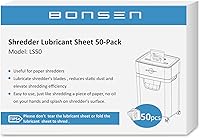
The BONSEN pack has 50 sheets at 6.10 by 8.74 inches. BONSEN says the sheets sharpen, clean, and lubricate the blades, and help protect against jams.
The size suits most home and office shredders, and the pack is made of recyclable paper.
That count suits a household that shreds a few sheets each week. You can keep sheets in a drawer and use one each month without tracking a bottle level.
The sheets also suit a cross cut or micro cut home model, per the specs above.
The Aurora Nuova SP24T pack has 24 sheets at 8 9/16 by 6 inches. Aurora says the sheets sharpen, clean, and lubricate the blades with a patented natural formula and non toxic grinding powder.
Each sheet is meant to be fed through like a regular sheet of paper.
That size suits a wider feed slot than the BONSEN sheets. Check your slot width before you buy.
Aurora says the sheets fit paper shredders with an entry width of 8 9/16 inches or larger, so measure first if you are not sure.
When should you choose oil, sheets, or a service call
Choose oil for low cost heavy use, sheets for clean and easy care, and a service call for repeated jams or odd noises. Each choice fits a different habit and machine.
Choose oil if you shred often and want the lowest cost per session, since a bottle lasts many uses. Choose sheets if you want no mess and no bottle to store.
Choose a service call if the motor stalls, the cutters are bent, or bits are stuck deep in the head. Do not force paper through a jam or open the motor housing, since a blocked cutter can damage the gears.
For very heavy media, check our heavy duty shredder for cardboard guide. Cardboard and thick stock need a different machine, and oiling will not fix a slot that is too small.
How to oil a paper shredder: final checklist
Unplug, clean, oil the teeth, run test sheets, and log the date. That short routine covers most home and office models.
Use this checklist before a big shredding session. Confirm the manual allows oil or sheets.
Clear the slot and brush the teeth. Add a thin line of oil or feed one sheet.
Run 5 to 10 plain sheets. Empty the bin so dust does not pile up.
Watch for early warning signs in the weeks after. If jams return fast, the blades may be dull or the bin may be full.
If oil drips for days, you used too much. If a sheet tears in the slot, clear it fully before the next pass.
A few minutes of care keeps a shredder feeding smoothly and helps the cutters last longer. Pick the method you will actually use each month, and stick with it.
Frequently asked questions
How often should you oil a paper shredder?
Oil it after every 10 to 20 sheets in heavy use, or about monthly for light home use, and follow your manual. You can also oil it when shredding slows, paper jams more often, or the sound changes.
What is paper shredder oil?
Paper shredder oil is a light oil made for shredder cutters. It coats the blades so paper moves through with less friction and less dust buildup.
Can you use cooking oil in a paper shredder?
No, do not use cooking oil. It can turn sticky, attract dust, and gum up the cutters, which makes jams more likely over time.
Can you oil a paper shredder with lubricant sheets?
Yes, lubricant sheets are a clean option. You feed one sheet through the shredder like a normal sheet of paper, and it coats and cleans the blades as it passes.