Paper Shredders: The Complete Buying Guide
A paper shredder machine cuts paper into small pieces so private details cannot be read or rebuilt. Choose cross-cut or micro-cut for sensitive documents, match sheet capacity and bin size to your volume, and maintain the cutter to keep it safe and jam free.
On this page (9 sections)
- What is a paper shredder machine and how does it work?
- What types of paper shredders are there?
- What security level do you need: P-1 to P-7 explained?
- How many sheets should a paper shredder handle?
- Which products fit home, home office and office use?
- How do you choose the best paper shredder machine for your needs?
- What maintenance does a paper shredder need?
- How do you use a paper shredder safely and avoid jams?
- Which paper shredder should you buy: home, office or specific needs?
A paper shredder machine is an electric cutter that turns paper into strips or tiny particles so private information cannot be read. You need one if you handle bills, medical forms, tax records, client files or any document with names, addresses or account numbers.
A good shredder matches three things to your life. It needs enough security for the documents you destroy, enough sheet capacity for your normal load, and a bin size that fits how often you want to empty it.
If you work from home or run a small office, those three choices matter more than a long feature list.
We compared the cut types, security levels, capacities and maintenance options below. We checked the specs for heavy duty, home and light use models so you can see the trade offs in plain terms.
What is a paper shredder machine and how does it work?
A paper shredder machine, also called a shredder machine for paper, pulls paper into a cutting head and slices it as it passes. The motor drives the cutter, the feed slot guides the sheet, and the pieces fall into a bin below.
You feed a few sheets at a time, the cutter cuts them, and the machine stops when the paper is gone.
Most home models are electric and automatic. You insert paper, a sensor starts the motor, and the machine feeds the sheet through at a steady speed.
If too much paper enters at once, the motor can strain or jam. That is why sheet capacity is a real limit, not a suggestion.
The cut type controls the shape of the pieces. Strip cut makes long lines.
Cross cut makes short rectangles. Micro cut makes very small particles.
Smaller pieces are harder to piece back together, but they also fill a bin faster and can put more heat on the motor during long jobs.
Security level describes how small the particles are. P-4 is a common level for secure cross cut shredding.
Higher levels use smaller particles and suit more confidential material. You should match the level to the sensitivity of the paper, not just to the price.
A shredder also needs a bin that holds the cut pieces. A small bin means more emptying, and a large bin means fewer stops.
Pull out bins make emptying easier, and a bin full indicator helps you stop before pieces back up into the cutter.
Many buyers ask about a paper shredder electric model for home use. The benefit is simple.
You press no buttons while it feeds, and the machine handles the cutting speed for you. The limit is also simple.
You still need to stay within the sheet limit and watch for heat on long runs.
What types of paper shredders are there?
There are strip cut, cross cut and micro cut shredders, plus machines built for different workspaces. Each type changes particle size, bin fill speed and best use.
Picking the right type first makes every other choice easier.
Strip cut is the most basic option. It turns a sheet into long strips that can sometimes be read or fitted back together.
It suits low sensitivity flyers, old forms with no private details, and light craft use. If you want real privacy, do not stop at strip cut.
Cross cut is the middle ground for most homes and offices. It cuts across the strip so the pieces are short and harder to rebuild.
Our guide to a cross cut paper shredder explains why this type suits everyday private paperwork. It also handles credit cards and staples on many models, if the maker lists those items.
Micro cut makes the smallest particles of the three types. It suits tax records, medical details and business files that need stronger protection.
Our guide to a micro cut paper shredder covers when that extra security is worth the slower speed and faster bin fill.
Home shredders focus on compact size and quieter use. They fit on a desk or in a corner and handle small batches.
Office shredders focus on higher sheet capacity, longer run time and larger bins. Shared workspace models may add safety sensors and jam prevention.
Some shredders also cut CDs, DVDs and credit cards. Those materials are harder than paper, so the cutter and motor must be built for them.
Check the material list before you feed anything other than paper. A paper only model can be damaged by plastic cards.
If you want a simple start, look at the best home paper shredder picks for light daily use. If you shred for a team, the best office paper shredder roundup covers higher capacity and longer run time.
What security level do you need: P-1 to P-7 explained?
Security level tells you how small the particles are, and smaller particles are harder to rebuild. P-1 strip cut is the lowest level and suits material with no private data.
P-2 also uses strips, with slightly smaller pieces, and still suits low sensitivity waste.
P-3 and P-4 move into cross cut territory. P-4 is a common choice for confidential home and office documents because the particles are small enough to block easy reconstruction.
Our best paper shredder p4 guide focuses on this level for sensitive everyday paperwork.
P-5, P-6 and P-7 use micro cut particles that get smaller as the level rises. These levels suit highly confidential, legal, medical or regulated records.
They also produce more pieces per sheet, so the bin fills faster and long jobs can heat up sooner.
You do not need the highest level for every sheet. Junk mail, grocery lists and old school notes do not need P-7.
Bills, tax forms, insurance papers and client records deserve stronger protection. Match the level to the worst document in the batch.
A strip cut model can lower your cost, but it can leave readable lines. If you shred anything with an account number, a signature or a full name plus address, choose cross cut or micro cut.
The extra cost buys pieces that are much harder to read or join.
For a middle path, many shoppers start with cross cut. If you pair cross cut with a higher sheet limit and a larger bin, you get security plus speed.
If you need smaller particles, compare micro cut models before you commit to slower feeding.
How many sheets should a paper shredder handle?
Sheet capacity tells you how many sheets the machine can take in one pass. A 6 sheet model suits light home use with a few pages at a time.
An 18 sheet model suits a home office or small business with thicker batches. The number is a limit for standard paper, not a target for every job.
Thicker paper, envelopes and folded sheets count more than their page count. A single thick envelope can strain a cutter that handles six thin sheets with ease.
When in doubt, feed fewer sheets and let the machine do clean passes.
Cross cut and micro cut models often have lower sheet limits than strip cut models at the same size. The cutter must make more cuts per sheet, so it works harder.
That is one reason a micro cut machine can feel slower even when it has a strong motor.
Run time matters as much as sheet capacity. Some machines run for 30 minutes before they need to cool down.
Others need a cool down after a few minutes of heavy use. If you shred a full filing box in one sitting, run time decides whether you finish or wait.
Heat protection is common on home models. It stops the motor before it overheats and lets you resume after a rest.
That protects the motor, but it also means a small machine is not built for all day office use. Put the machine where you can take breaks without losing your place.
For light use, a smaller cross cut machine can be enough. Our best cross cut paper shredder for home use guide covers models made for desks and small rooms.
For a compact cross cut option, see the best small cross cut shredder picks.
Which products fit home, home office and office use?
Home use suits a compact cross cut shredder that handles a few sheets and empties often. Home office use suits a stronger cross cut or micro cut model with a larger bin and longer run time.
Office use suits the highest capacity and longest run time, often with safety and jam features.
The Amazon Basics 6-Sheet Cross-Cut Paper and Credit Card Shredder fits light home use. It handles 6 sheets, shreds credit cards, small paper clips and staples, and has a 3.8 gallon bin.
It also has auto start, manual reverse for jams and thermal protection against overheating.
That combination suits bills, junk mail and old cards in small batches. The 8 pound weight and 15 inch height make it easy to move and store.
It does not suit long office runs or thick batches, so feed it a few sheets at a time.
The Fellowes Powershred 99Ci 18-Sheet model fits a home office or small business. It handles up to 18 sheets and also shreds staples, credit cards, paper clips, CDs and DVDs.
Fellowes says it tears paper into 397 particles at P-4 security, and it runs for up to 30 minutes before a cool down.
The 9 gallon pull out bin and LED bin full indicator reduce stops during larger jobs. SafeSense technology stops the shredder when hands or paws touch the opening, and the jam proof system powers through tough jobs.
At 36.4 pounds, it is a fixed workspace machine more than a portable one.
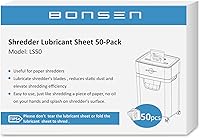
The BONSEN Lubricant Sheets Pack of 50 fits any setup that needs clean maintenance. Each sheet is 6.10 by 8.74 inches and works like a piece of paper through the cutter.
The sheets sharpen, clean and lubricate blades without oil on your hands or on the shredder surface.
That pack suits home, home office and office shredders from most brands, as long as the feed slot fits the sheet size. It is a support product, not a shredder, so stock it before blades start to drag or jam.
Use it on a regular schedule for best results.
How do you choose the best paper shredder machine for your needs?
The best paper shredder machine is the one that matches your documents, volume and space. Start with the most sensitive paper you shred.
If that paper has account numbers or full personal details, choose P-4 cross cut or better. If it is only junk mail, a lower level can save money.
Next, count your normal batch size. A few pages a week points to a 6 sheet home model.
A stack of 10 to 18 sheets points to a heavy duty model. Feeding a large machine a few sheets at a time is fine, but feeding a small machine a large stack invites jams and heat stops.
Then check bin size against how often you will shred. A 3.8 gallon bin suits light use because you can empty it in seconds.
A 9 gallon bin suits heavier use because cross cut pieces pile up fast. A bin full indicator helps, but it does not replace emptying on time.
Check run time and heat protection for long jobs. A 30 minute run time suits a home office that clears a box in one sitting.
A short run time suits a desk that shreds a few pages now and then. Thermal protection is a safety feature, not a flaw, because it protects the motor.
Check safety features if children, pets or shared users are nearby. SafeSense stops the cutter when hands or paws touch the opening.
Auto start and manual reverse help you clear jams without forcing paper through. Quiet operation helps in shared rooms, but it does not mean the machine can run all day.
Check size, weight and power needs before you buy. A lightweight 8 pound model can move between rooms.
A 36.4 pound model with a 25.19 inch height needs a fixed spot near an outlet. Measure the slot, the floor space and the cord reach before the box arrives.
If you want P-4 security with strong capacity, see our best paper shredder p4 picks again in the context of your batch size. If you prefer Fellowes for service and parts, compare the best Fellowes cross cut paper shredder and best Fellowes micro cut paper shredder options.
What maintenance does a paper shredder need?
A paper shredder needs lubrication, regular emptying and clean feeding to stay safe. The cutter blades lose their edge over time, and dry friction makes pieces drag and jam.
Lubrication keeps the cut clean and helps particles fall into the bin instead of sticking in the head.
You can use oil made for shredders or use lubricant sheets. Our guide on how to oil a paper shredder explains the oil method step by step.
Lubricant sheets offer a cleaner option because you feed them like paper and avoid oil on your hands.
The BONSEN pack of 50 sheets is made for that routine. Each sheet sharpens, cleans and lubricates blades as it passes through.
BONSEN says the sheets protect against jamming and improve efficiency, and they are made of recyclable paper. The 6.10 by 8.74 inch size fits most brands with a matching slot.
Empty the bin before it is full. Cross cut and micro cut pieces look small, but they fill volume quickly.
When pieces back up, they can jam the cutter or trigger a bin full stop. A pull out bin and an LED indicator make it easier to empty at the right time.
Feed paper straight and in small batches. Folded corners, thick envelopes and mixed materials can catch in the slot.
Remove large clips and staples unless the maker lists them for that model. Manual reverse can clear a jam, but repeated jams mean you are feeding too much at once.
Use best paper shredder bags if you want cleaner emptying and less dust. Bags line the bin, so you can lift full contents out without shaking loose particles.
They do not change security, but they make clean up faster and keep the bin area tidy.
If a part wears out, check paper shredder replacement parts before you replace the whole machine. A worn bin, cutter cover or switch can cost less than a new unit.
Confirm the part number and compatibility before you order.
How do you use a paper shredder safely and avoid jams?
Safe use starts with the right feed. Insert paper straight into the slot, let the auto start pull it in, and keep your fingers clear of the opening.
SafeSense models stop when hands touch the slot, but you should not rely on that feature as a habit. Keep loose clothing, hair and jewelry away from the feed.
Feed only what the maker lists for the model. The Fellowes model above lists staples, credit cards, paper clips, CDs and DVDs.
The Amazon Basics model lists credit cards, small paper clips and staples. A paper only model should get paper only, even if the slot looks wide enough for a card.
Watch for signs of strain. Slowing, loud grinding, uneven pieces or frequent stops mean the load is too thick or the blades need lubrication.
Stop, use manual reverse if needed, and feed fewer sheets on the next pass. Repeated forcing can damage the cutter or the motor.
Let the machine cool down after long runs. A 30 minute run time is generous for home office use, but it still ends.
Thermal protection will stop a smaller machine sooner, and you should let it rest before you resume. That pause protects the motor and keeps the cut clean.
Empty the bin early and often. Full bins cause jams faster than almost any other habit.
If the LED indicator lights up, stop and empty before you feed more paper. Shake the bin gently only if the maker allows it, and avoid overfilling bags.
Store the machine where it cannot tip or pull a cord. A heavy model should sit on a flat floor.
A light model should sit where children cannot reach the slot easily. Unplug it for long storage and keep the slot clear of dust and loose pieces.
Shred sensitive paper as soon as you can. Old bills and forms sitting in a pile are a privacy risk even before you throw them out.
A shredder turns that pile into unreadable pieces in minutes, which is the whole point of owning one.
Which paper shredder should you buy: home, office or specific needs?
Pick a compact 6 sheet cross cut model if you shred a few pages at home. The Amazon Basics model fits that need with a 3.8 gallon bin, auto start, manual reverse and thermal protection.
It is light at 8 pounds, so you can store it in a closet and bring it out for small batches.
Pick an 18 sheet P-4 model if you run a home office or small business. The Fellowes Powershred 99Ci fits that need with 18 sheet capacity, P-4 cross cut security, a 9 gallon bin and 30 minute run time.
It also shreds cards, CDs and DVDs, and SafeSense adds safety in shared spaces.
Pick micro cut if your documents need smaller particles than P-4. Our best micro cut paper shredder roundup covers that upgrade.
If noise matters in a shared room, the best quiet micro cut paper shredder guide focuses on lower sound models.
Pick strip cut only for low sensitivity waste. Our best strip cut paper shredder guide explains the trade off, but most readers should choose cross cut for private paperwork.
Strip cut leaves readable lines that cross cut does not.
Add lubricant sheets to any order. The BONSEN 50 pack helps you maintain blades without messy oil, and it fits cross cut and micro cut machines from most brands.
Use a sheet on a regular schedule, empty the bin before it fills, and feed small batches for clean cuts.
For a paper and credit card combo, check the best paper and credit card shredder roundup and confirm card capacity for each model. Both main shredders above list credit card shredding, but feed cards one at a time and only as the maker directs.
A paper shredder machine earns its place when it matches your documents and your habits. Choose the security level first, then the sheet capacity, then the bin and run time.
Maintain the cutter, empty the bin early, and you will get clean, safe shredding for years.
Frequently asked questions
What is paper shredder machine and what does it do?
A paper shredder machine feeds paper through a cutter that turns sheets into strips or small particles. It helps you destroy names, addresses, account details and other private information before you recycle or trash the remains.
Choose the cut type based on how sensitive your documents are.
What security level should a home paper shredder have?
Many home users choose P-4 cross-cut security for everyday private paperwork, while micro-cut can suit more sensitive records. The right level depends on the details you shred, not on how often you shred.
Check the particle size and sheet capacity before you buy.
How often should you oil a paper shredder?
You should oil or lubricate a shredder regularly when you use it often, and a little less often for light home use. Lubrication reduces friction, helps particles pass through, and can lower jam risk.
Lubricant sheets are a clean way to do this without messy oil.
Can a paper shredder handle staples and credit cards?
Some models can handle staples, small paper clips and credit cards, but you must check the stated capacity for each material. Paper sheet capacity does not always mean the same capacity for plastic cards.
Feed only items the maker lists for that model.