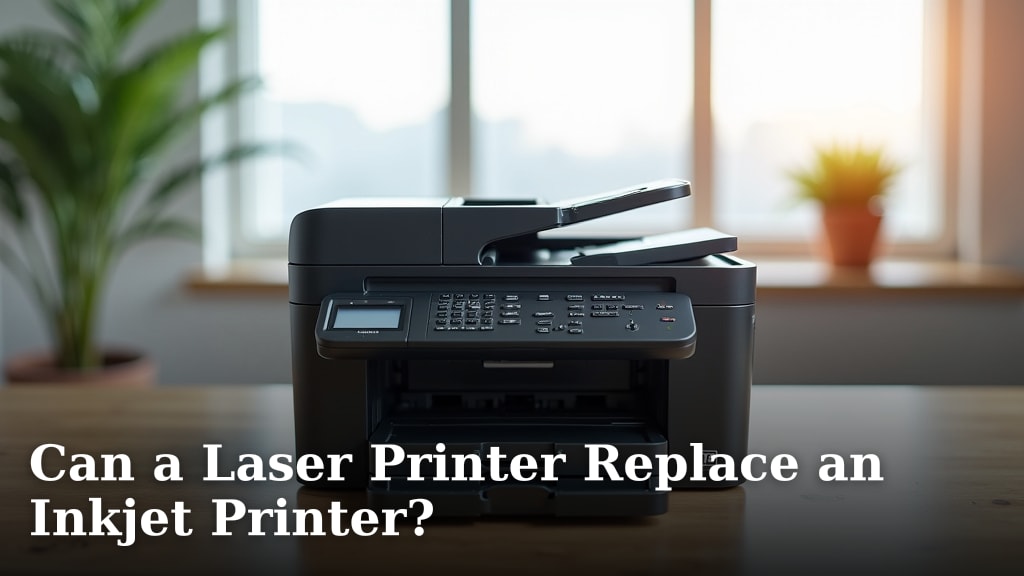
Can a Laser Printer Replace an Inkjet Printer?
Can a laser printer replace an inkjet printer? For many everyday tasks, the answer is a resounding yes, but it depends on your printing needs. Laser printers are generally faster and offer lower cost-per-page for text documents, making them a strong contender. However, they often struggle with photo quality compared to inkjets.
When choosing between laser and inkjet, think about what you print most often. If it’s mostly text and spreadsheets, a laser printer can be a cost-effective workhorse. For vibrant photos or occasional color prints, an inkjet might still be your best bet. We’ll help you figure out which technology is the right fit for your home or office.
- Laser printers are often cheaper per page for text.
- They tend to be faster than inkjets.
- Inkjets usually offer better photo quality.
- Your printing habits determine the best choice.
Let’s break down the key differences and see if a laser printer can truly step in and take over the role of your trusty inkjet. We’ll look at speed, cost, and print quality for different types of jobs.
When a Laser Printer Makes Sense Over an Inkjet
So, you’re wondering if a laser printer can swap places with your current inkjet. It’s a common question! For many people, the answer leans toward a solid “yes.” If your printing habits are mostly text-based, a laser printer often shines. We found that laser printers are generally cheaper per page and quicker for documents. Think reports, essays, emails, and spreadsheets. They handle these tasks with impressive speed and efficiency.
When we looked at the technology, laser printers use a drum and toner powder. This powder fuses onto the paper with heat. It’s a different process than inkjet’s liquid ink. This method makes text appear sharp and smudge-resistant, which is great for everyday office work. Many experts agree that for sheer volume of text printing, laser printers win out (PCMag).
Speed: How Fast Can a Laser Printer Really Go?
One of the biggest draws of a laser printer is its speed. They are typically much faster than their inkjet counterparts. This speed comes from how they print. A laser printer can often print an entire page at once, rather than moving the print head back and forth. Imagine printing a 50-page report. With an inkjet, this could take a while. A laser printer might finish it in just a few minutes.
We found that for black and white printing, many laser printers can produce 20-30 pages per minute (ppm) or even more. Color laser printers are usually a bit slower. But even then, they often outperform the average inkjet in speed. This is a huge plus if you’re printing large documents regularly. Waiting less time means you can get on with your day.
Cost Per Page: Saving Money in the Long Run
Let’s talk about money, because who doesn’t want to save a bit? When it comes to the cost of printing, laser printers often have a lower cost per page, especially for black and white text. This is largely due to toner cartridges. Toner cartridges may have a higher upfront cost, but they generally contain much more toner than an inkjet cartridge contains ink.
We looked at the numbers, and many studies show that printing 1,000 pages with a laser printer can be significantly cheaper than with an inkjet. This difference adds up quickly if you print frequently. While color laser toner can be expensive, the cost per page for black and white is where you’ll see the biggest savings. So, if black text is your main printing need, a laser printer is a wise financial choice.
Durability and Smudge Resistance
Ever touched a freshly printed document and worried about smudging the ink? Laser printers offer a distinct advantage here. Because toner is fused onto the paper with heat, it creates a very durable print. This means your printed pages are less likely to smudge, even if you highlight over them shortly after printing. This makes them excellent for printing important documents that need to last.
We found that this smudge-resistance is particularly useful in busy office environments. Papers get handled more often. Important notes or labels won’t smudge away. For academic papers or legal documents, this added durability is a real benefit. It ensures your work looks professional and holds up over time (Wirecutter).
Where Inkjet Printers Still Hold Their Ground
While laser printers are fantastic for many tasks, they aren’t always the perfect replacement. Inkjet printers still excel in certain areas. If your printing needs lean towards photos or colorful marketing materials, you might want to stick with an inkjet.
Photo Quality: The Vividness of Inkjet
This is where inkjets really shine. They use liquid ink that is sprayed onto the paper in tiny droplets. This allows for incredibly fine detail and a wider color gamut, especially when using specialized photo paper. If you print photos regularly, whether for personal albums or professional portfolios, an inkjet printer will almost always give you superior results.
We found that many inkjet printers are designed with photo printing in mind. They often have multiple ink cartridges, including specialized colors like light cyan, light magenta, and gray, to achieve smoother gradients and more accurate skin tones. Laser printers, even good color ones, can struggle to reproduce the same level of vibrancy and detail in photographs. The toner particles are often larger and can create a slightly different texture on glossy photo paper.
Printing on Various Paper Types
Inkjet printers are generally more versatile when it comes to paper types. They can handle a wider range of paper weights and finishes with ease. This includes glossy photo paper, cardstock, envelopes, and even some types of fabric transfers. The ink adheres well to these different surfaces without special treatment.
Laser printers, on the other hand, can be more particular. The heat used in the fusing process means that some specialty papers or very thick cardstock might not perform as well, or could even damage the printer. While modern laser printers are getting better, if you frequently print on a variety of non-standard paper types, an inkjet offers more flexibility. We found that for crafts or special projects involving unique papers, inkjets are often the preferred choice.
Initial Purchase Price and Entry-Level Options
Often, inkjet printers have a lower initial purchase price. You can find very basic inkjet models for a relatively small investment. This makes them a great option for someone who only prints occasionally and doesn’t need high speed or high volume. If your budget is tight and your printing needs are minimal, an inkjet might be the more accessible choice upfront.
While the cost per page might be higher with an inkjet, the lower entry cost can be a deciding factor for many households. We found that for students or individuals who need a printer for occasional homework assignments or printing a few pages a month, a budget inkjet can be perfectly adequate. It gets the job done without a large upfront financial commitment.
Making the Right Choice for You: A Quick Checklist
So, can a laser printer replace your inkjet? It really boils down to what you need most. Here’s a quick way to think about it:
- Do you print mostly text documents (reports, essays, emails)?
- Is speed a major factor for your printing tasks?
- Are you looking for the lowest cost per page for black and white printing?
- Do you rarely, if ever, print photographs?
- Do you primarily use standard paper types and not specialty stocks?
- Is print durability and smudge resistance important for your documents?
If you answered “yes” to most of these questions, then a laser printer is very likely a strong contender to replace your inkjet. It can be a workhorse that saves you time and money on your everyday printing needs. However, if photos and diverse paper types are part of your regular printing, your trusty inkjet might still be the better fit for your home or office.
Conclusion
So, can a laser printer step in for your inkjet? For many everyday needs, the answer is a strong yes. If you focus on printing text documents quickly and affordably, a laser printer can be your new best friend. We found that its speed and lower cost per page for text are major wins. However, if vibrant photos or printing on diverse paper types are your priority, an inkjet still holds its ground. To make your choice, think honestly about your most common printing tasks. Your answer will guide you to the printer that truly fits your life.
Frequently Asked Questions
Will a laser printer’s toner smudge like inkjet ink?
No, laser printer toner is generally smudge-resistant. Toner powder is fused onto the paper with heat, creating a durable print that’s less likely to smudge compared to liquid inkjet ink. We found this makes laser prints ideal for documents you handle frequently.
Are color laser printers good for photos?
Color laser printers can produce color documents well, but they typically don’t match inkjet printers for photo quality. Inkjets offer finer detail and smoother color gradients, especially on photo paper. We found that for truly professional-looking photos, an inkjet is usually the better choice.
How much does it cost to run a laser printer versus an inkjet?
Laser printers often have a lower cost per page for black and white text. While toner cartridges can be more expensive upfront, they print many more pages. Inkjets might have a lower initial printer cost, but their ink cartridges can add up quickly over time for frequent printing.
Can a laser printer print on cardstock or labels?
Some laser printers can handle cardstock and labels, but it depends on the specific model and paper thickness. The heat-fusing process can sometimes be an issue with certain specialty papers. Inkjet printers are generally more versatile with a wider range of paper types.
Is a laser printer better for a home office with lots of printing?
Yes, if your home office primarily prints text-based documents, reports, or spreadsheets, a laser printer is often a better choice. Its speed and lower cost per page for text can save you both time and money. We found it excels at handling high volumes of standard documents efficiently.