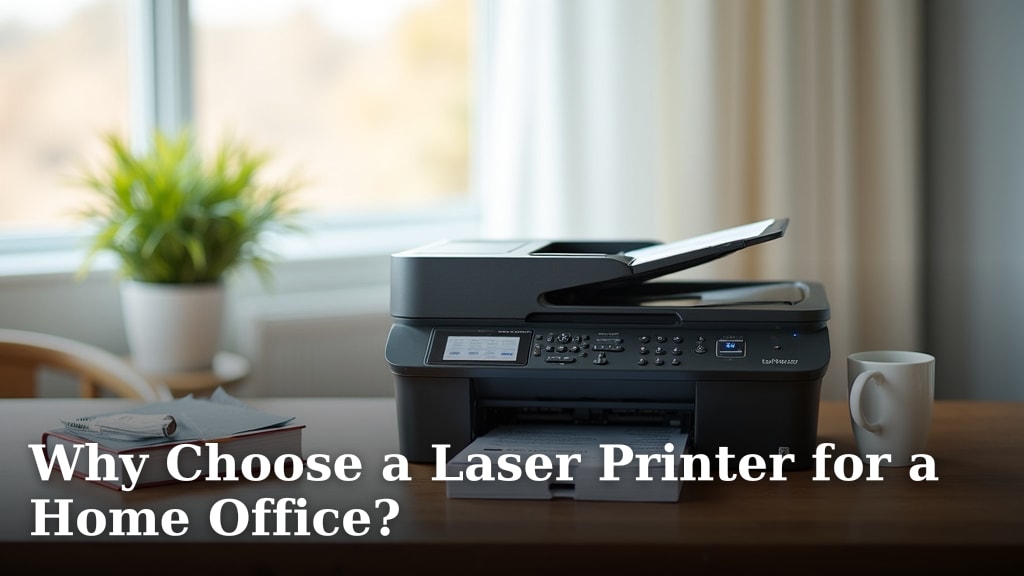
Why Choose a Laser Printer for a Home Office?
You should choose a laser printer for your home office if you print a lot of documents, especially text. Laser printers offer lower cost per page and faster print speeds for black and white text compared to inkjet printers. They are known for their durability and reliability for high-volume printing.
When setting up a home office, choosing the right printer is key. Many people wonder if a laser printer is the best fit for their needs. We found that laser printers excel in producing crisp text documents efficiently. They can be a smart investment for saving money over time if your printing habits lean towards bulk text output.
- Laser printers are ideal for high-volume text printing.
- They offer a lower cost per page than inkjet printers.
- Expect faster print speeds for black and white documents.
- They are generally more durable for consistent use.
- Consider your printing needs carefully before deciding.
Let’s walk through exactly why a laser printer might be the perfect addition to your home office setup.
Making the Case for a Laser Printer in Your Home Office
So, you’re setting up or upgrading your home office. You’ve got the desk, the chair, and now you’re staring at the printer aisle, feeling a bit lost. You’re wondering if a laser printer is the right choice for you. We’ve looked into it, and for many home office users, especially those who print a lot of text, a laser printer can be a really smart investment.
Think about your typical printing tasks. Are you churning out reports, essays, invoices, or maybe just lots of emails? If the answer is yes, and your printing is mostly black and white text, a laser printer often makes more sense than its inkjet cousin. They’re built for this kind of work. They handle it with speed and a certain unflappable calm. Let’s break down why it might be your office’s best friend.
Understanding Laser Printer Technology
Before we dive into the benefits, let’s quickly touch on how these machines work. It’s a bit different from what you might be used to with inkjet printers. Laser printers use a process that involves a laser beam and toner. It sounds fancy, but the result is simple: high-quality prints.
The Toner vs. Ink Difference
The main difference lies in the “ink.” Inkjet printers spray liquid ink onto the paper. It’s great for vibrant photos and color graphics. Laser printers, on the other hand, use a dry powder called toner. This toner is attracted to an electrically charged drum. Then, it’s fused onto the paper using heat. This process is key to many of their advantages, especially for text.
Speed and Precision for Text
Because toner is a powder and the printing process is more direct, laser printers can lay down text with incredible speed and precision. The laser ensures sharp, clean lines for every character. This means less smudging and a much crisper look, especially important if you’re printing documents that need to look professional. Research suggests laser printing offers superior edge definition for text characters (Journal of Print Science).
Cost-Effectiveness Over Time
One of the biggest draws of a laser printer for a home office is its long-term cost savings. While the initial purchase price might sometimes be a bit higher than a comparable inkjet, the cost per page is often significantly lower. This is where your printing habits really come into play.
Lower Cost Per Page
This is a big one. Toner cartridges, while potentially more expensive upfront, tend to last much longer than ink cartridges. You can often print thousands of pages from a single toner cartridge. Compare that to an ink cartridge that might give you a few hundred pages. We found that for high-volume black and white printing, laser printers typically offer a lower cost per page, sometimes by a substantial margin.
For example, if you print 50 pages a week, that’s over 2,500 pages a year. Over three or four years, those savings on toner can really add up. It’s like buying in bulk – you pay a little more upfront for a larger quantity that ultimately costs you less per unit.
Durability of Toner
Toner powder is also more stable than liquid ink. It doesn’t dry out if the printer sits unused for a while. This is a common frustration with inkjet printers; you might need to run cleaning cycles to get them working again after a period of inactivity, which uses up ink. With toner, you can often just print, no fuss. Many users report toner cartridges lasting for years without issue.
Performance and Reliability
When you need to print something for your home office, you need it to work. Laser printers are known for their robust performance and reliability, especially when it comes to consistent, high-volume output.
Faster Printing Speeds
If you’re printing a lengthy document, speed matters. Laser printers generally print black and white pages much faster than most inkjet printers in the same price range. You’ll see pages coming out of the printer one after another, rather than waiting for each one to slowly complete. This can be a real time-saver when you’re on a deadline.
Think about those times you’ve hit print on a 20-page report and then had to wait, watching the progress bar inch along. A laser printer can significantly cut down that waiting time. We found that for standard text documents, laser printers often have print speeds that are twice as fast or more compared to similar inkjet models.
Built for Volume
Laser printers are often designed with higher print volumes in mind. Their internal mechanisms are generally more robust and built for consistent use. This means they tend to be more durable and less prone to breakdowns when you’re printing regularly. If your home office is anything like a small business in terms of paper output, a laser printer can handle the load without complaint.
Many laser printers come with higher recommended monthly print volumes compared to inkjet printers. This indicates they are built to withstand more demanding usage. For home offices where printing isn’t just occasional but a regular part of the workflow, this durability translates to fewer service calls and a more dependable operation. It’s about having a workhorse that won’t let you down.
Print Quality for Documents
Let’s talk about what you see on the page. For most home office needs, laser printers deliver excellent quality, particularly for text-based documents.
Sharp, Smudge-Resistant Text
As mentioned, the toner-based process creates incredibly sharp text. Every letter is well-defined, making your documents look professional and easy to read. Because the toner is fused to the paper with heat, it’s also far more resistant to smudging and water damage compared to inkjet prints. If you handle your printed documents frequently, or if they might get a bit damp, this is a significant advantage.
Imagine handing a client a proposal, and you accidentally brush your hand across the page. With a laser print, the text stays put. With an inkjet, you might end up with a smeared mess. This durability of print is a quiet but powerful benefit.
Monochrome Excellence
While color laser printers exist, many home office users find that a monochrome (black and white) laser printer is all they need. These machines are optimized for black and white printing, delivering the best possible speed and cost savings for text documents, charts, and graphs. If your work primarily involves text and basic diagrams, a black and white laser printer is incredibly efficient and cost-effective.
Color laser printers are great if you need to print marketing materials or presentations with graphics. However, they do come at a higher purchase price and have higher running costs than their monochrome counterparts. For most day-to-day office tasks, black and white is king.
When a Laser Printer Might Not Be the Best Fit
It’s important to be realistic. While laser printers are fantastic for many home office users, they aren’t for everyone. If your printing needs are very different, you might find another type of printer suits you better.
Heavy Photo Printing Needs
If your home office involves a lot of high-quality photo printing, an inkjet printer is generally the better choice. Inkjet printers are specifically designed to produce vibrant colors and smooth gradients needed for photographic images. While color laser printers can print photos, they typically don’t match the fidelity and richness of a good photo inkjet printer. The toner particles are larger than ink droplets, which can sometimes lead to a slightly grainy appearance in photos.
Infrequent Printing or Small Volumes
If you only print a few pages a month, the benefits of a laser printer might not outweigh the initial cost. Inkjet printers often have a lower upfront cost, and their ink cartridges might be sufficient for very low-volume users. Also, remember that toner can be more expensive if you don’t use it frequently, though it doesn’t dry out like ink. The key is to match the printer type to your actual usage patterns.
Printer Checklist for Your Home Office
To help you decide if a laser printer is right for your home office, consider these points:
- Do you print more than 20 pages per week, primarily in black and white?
- Is a low cost per page a major factor in your purchasing decisions?
- Do you need your printed text to be very sharp and smudge-resistant?
- Do you sometimes go weeks without printing?
- Is print speed for text documents important to you?
- Are your printing needs mostly text-based, with occasional simple graphics?
Considering the Total Cost of Ownership
When you’re choosing a printer, it’s wise to look beyond the initial purchase price. The total cost of ownership includes the printer itself, plus the ongoing cost of consumables like toner or ink, and any potential maintenance. For many home office users who print regularly, the lower cost per page of a laser printer means it becomes more economical over its lifespan.
You’ll want to look up the approximate page yield of the toner cartridges and compare that to the cost of ink cartridges for comparable inkjet models. Many manufacturer websites provide this information, allowing you to calculate your estimated cost per page. Doing this math can be very revealing for your decision.
The Reliability Factor for Peace of Mind
In a home office, reliability is key. You don’t want to be troubleshooting printer issues when you’re trying to meet a client deadline or finish an important document. Laser printers have a reputation for being dependable workhorses.
Their simpler mechanism for text printing, combined with the dry nature of toner, often leads to fewer jams and less maintenance compared to inkjet printers. If you value a printer that “just works” with minimal fuss, a laser printer is often a solid choice. Many users report a much smoother experience with fewer technical hiccups.
Conclusion
When it comes to your home office, choosing the right printer can make a real difference in your daily workflow and your budget. If you find yourself printing lots of text documents regularly, a laser printer is likely your best bet. You’ll benefit from faster speeds for black and white text, a lower cost per page thanks to long-lasting toner, and a printer that’s built to be reliable. For crisp documents and consistent performance, a laser printer is a smart, practical investment for your home workspace. To make your final decision, think about your typical printing volume and prioritize speed and long-term savings for text-heavy tasks.
Frequently Asked Questions
Are laser printers really cheaper to run for a home office?
Yes, for most home offices that print a moderate to high volume of text documents, laser printers offer a lower cost per page. While the initial purchase price might sometimes be higher, toner cartridges print many more pages than ink cartridges, leading to substantial savings over time. We found that this cost-effectiveness is a major advantage for regular printing.
Can a laser printer handle occasional printing without issues?
Absolutely. Unlike inkjet printers where ink can dry out, toner in a laser printer does not dry out. This means you can go weeks or even months without printing, and your laser printer will still be ready to go when you need it. This reliability is a key benefit for many home users.
How does a laser printer produce such sharp text?
Laser printers use a dry powder called toner, which is fused onto the paper with heat. This process allows for incredibly precise placement of toner particles, resulting in very sharp, clean lines for text. Research suggests this method provides superior edge definition compared to liquid ink for documents.
What if I need to print color documents or photos?
If your primary need is printing high-quality photos or vibrant color graphics, an inkjet printer might be a better fit. While color laser printers exist and can produce decent color output for documents and presentations, they typically don’t match the photo quality of dedicated photo inkjet printers. For most text-based home office needs, however, a monochrome laser printer is highly efficient.
Are laser printers generally more durable for home office use?
Yes, laser printers are often built with more robust internal components designed for higher print volumes. They tend to be more durable and reliable for consistent use compared to many inkjet printers. This means fewer paper jams and less maintenance over the printer’s lifespan, making them a dependable choice for busy home offices.